
 This one’s off-topic in the sense that it’s non-political. Consider it a celebration of something that was created due to free markets and the division of labor, a la Jeffrey Tucker.
I’d like to take a moment to stick up for a much maligned piece of software. A piece of software that undoubtedly provides great benefit to the vast majority of those reading this, yet gets absolutely no credit or praise. In fact, it is almost universally maligned and spoken of as if it is has a negative effect on society at large. I am speaking of Microsoft PowerPoint.
Ask the average person about PowerPoint and they will immediately recall boring presentations, uninteresting speakers, and ineffective training. They might even go as far as to use phrases such as “death by PowerPoint” (a favorite in the military). About half of Wikipedia’s entry on PowerPoint consists of such criticism (including blaming it for the space shuttle Columbia disaster!), with little praise to be found.
While we have all undoubtedly experienced many boring and uninspiring PowerPoint presentations, we must keep in mind that PowerPoint is not some sort of self-aware entity. PowerPoint is a tool, like a hammer, or a gun. It is a tool used by men for a specific purpose. When used properly, it can be used to great effect. It can dramatically increase the quality of a presentation or lecture, both in terms of entertainment value and holding the interest of the audience, and in terms of conveying critical information. However, unlike a hammer or a gun, I maintain that PowerPoint absolutely does not ever result in making things worse. With a hammer, you can accidentally squash your finger. With a gun, you can accidentally shoot yourself, or someone you did not intend to shoot. Using PowerPoint poorly may result in a boring presentation, but likely not any more boring than the presentation would have been if PowerPoint wasn’t used at all.
This is the key point to keep in mind. PowerPoint was not created as a substitute for a compelling presentation by a dynamic speaker about an interesting topic. Such a best-case scenario has little use for such a simple tool. Rather, PowerPoint was created as a substitute for a shy or boring speaker standing at a lectern and looking down, reading from a series of note cards, while the audience struggles to hear, process, and retain the information. Those who criticize boring PowerPoint presentations rarely seem to consider whether the session would have been better if there was no PowerPoint at all. I suggest that it would not.
PowerPoint exists as an aide, both to the speaker, and to the audience. It allows the speaker to have a ready reference while maintaining engagement with the audience. It allows the audience to follow along, and process information visually as well as through sound. It gives the audience ample time to take notes, and easily identifies the key points of the topic.
It is also a very well designed and easy to use piece of software. Templates are provided so that even first-time users can construct a presentation that looks sharp and is clear, organized, and easy to understand in a manner of minutes. No special training or advanced technical manuals are required.
It is true that great public speakers have little use for PowerPoint, but we should not compare any boring presentations we have seen in our lives to those given by great public speakers. Rather, we should compare them to how effective the presentation would have been if given by a poor speaker with no visual aids whatsoever. That is the proper comparison.
So the next time you hear someone complaining about having to sit through a boring PowerPoint presentation, ask them if they think the presentation would be more interesting if there was no PowerPoint at all. The simple fact of the matter is that PowerPoint is a brilliant and imminently useful piece of software that greatly assists in the ability of the average person to effectively communicate ideas to a large audience. It provides tremendous benefits to all of us.
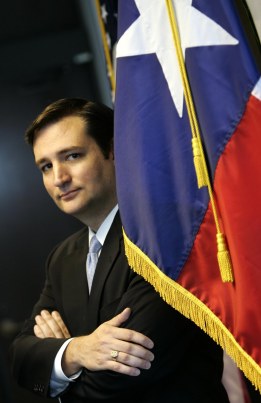 During the Senate hearing on the new (if you haven’t yet suffered under it, it’s new to you!) proposed “assault weapons” ban,
 It seems that in recent weeks, the news is full of items that appear to be great victories for lovers of freedom.
  Victory! Rand Paul has delivered us from evil and single-handedly persuaded Eric Holder to denounce his tyrannical ways, admitting that it would not be constitutional for the President to order a drone strike against “an American not engaged in combat on American soil.” We’ve won! Right?

 Previously, in the


 Dude, Where's My Freedom?

Notes on Costco vs Wal-Mart
The argument falls apart under serious scrutiny, as provided by The Daily Beast’s Megan McArdle. The two businesses are vastly different and there is little reason to expect them to have similar employment policies. Also, their (former) CEO was a committed progressive.
This article does a good enough job on its own, but I would also like to add a couple major points it did not seem to touch on. Most of the articles sympathetic to Costco (you can find them on common leftist sites such as HuffPo or Slate) emphasize Costco’s profits, inferring this translates into great shareholder returns. Is that necessarily the case? Over the last year, Wal-Mart stock has outperformed Costco stock on price appreciation alone. Its dividend yield is currently more than double Costco’s, and its beta is lower, making it a less risky investment.
But perhaps the most important point, and this cannot be emphasized enough: No business anywhere is a make-work program. The purpose of business is not to provide jobs, or to provide a certain level of income or standard of living to employees. Period. A company exists to create value for shareholders. It accomplishes this by pleasing its customers. The notion that a company could “afford” to pay its employees more is absurd. To pay employees more than their market value is to essentially steal from the shareholders, or from the customers.
Please understand that all of this nonsense comes from the “stakeholder model” that is now being taught in business and ethics classes as the preferred mode of thinking about how a business should operate. Under the stakeholder model, every stakeholder is considered equal. The needs of the employees are seen as just as important as the needs of the shareholders. The needs of the community and the government are seen as just as important as the needs of the customers. This, of course, is nonsense. It is leftist propaganda masquerading as factual information on how things can and should work. Reality does not work this way. I may do a longer piece on the “stakeholder model” later, as it is growing in popularity and relatively unchallenged.